Replanting after the ash losses
Ash was once one of the most common trees in Warren County hedgerows and backyards. Emerald ash borer has killed most of the untreated ones, and many homeowners in town and out in Washington Township now have bare spots where a big shade tree stood. Old silver maples and Callery pears that split in storms leave more gaps. Planting a replacement soon is worth it, since a new tree needs years before it gives back real shade.
We do not plant one kind of tree everywhere. Repeating the same species across a street is how a single pest wiped out the ash. We mix species so your yard is not betting on just one.
What grows well here
The Pohatcong valley around Washington sits largely on limestone, and the soils over it are often silty clay that runs neutral to alkaline. That matters more than people expect. Pin oak, for example, often turns yellow and weak in high-pH soil because it cannot take up enough iron. We may test the soil before suggesting a tree for a spot.
- Large shade trees: swamp white oak, red oak, sugar maple, tulip poplar and Kentucky coffeetree.
- Wet or low spots: river birch, sycamore, black gum and bald cypress.
- Smaller yards and near the house: eastern redbud, serviceberry, American hornbeam and flowering dogwood in partial shade.
- Screens and windbreaks: white pine where the soil drains, and eastern redcedar on drier, rockier ground.
We steer people away from Callery pear and Norway maple, which are both invasive here, and from planting more maples near tree of heaven, since spotted lanternflies feed on both.
Deer are the biggest threat to young trees
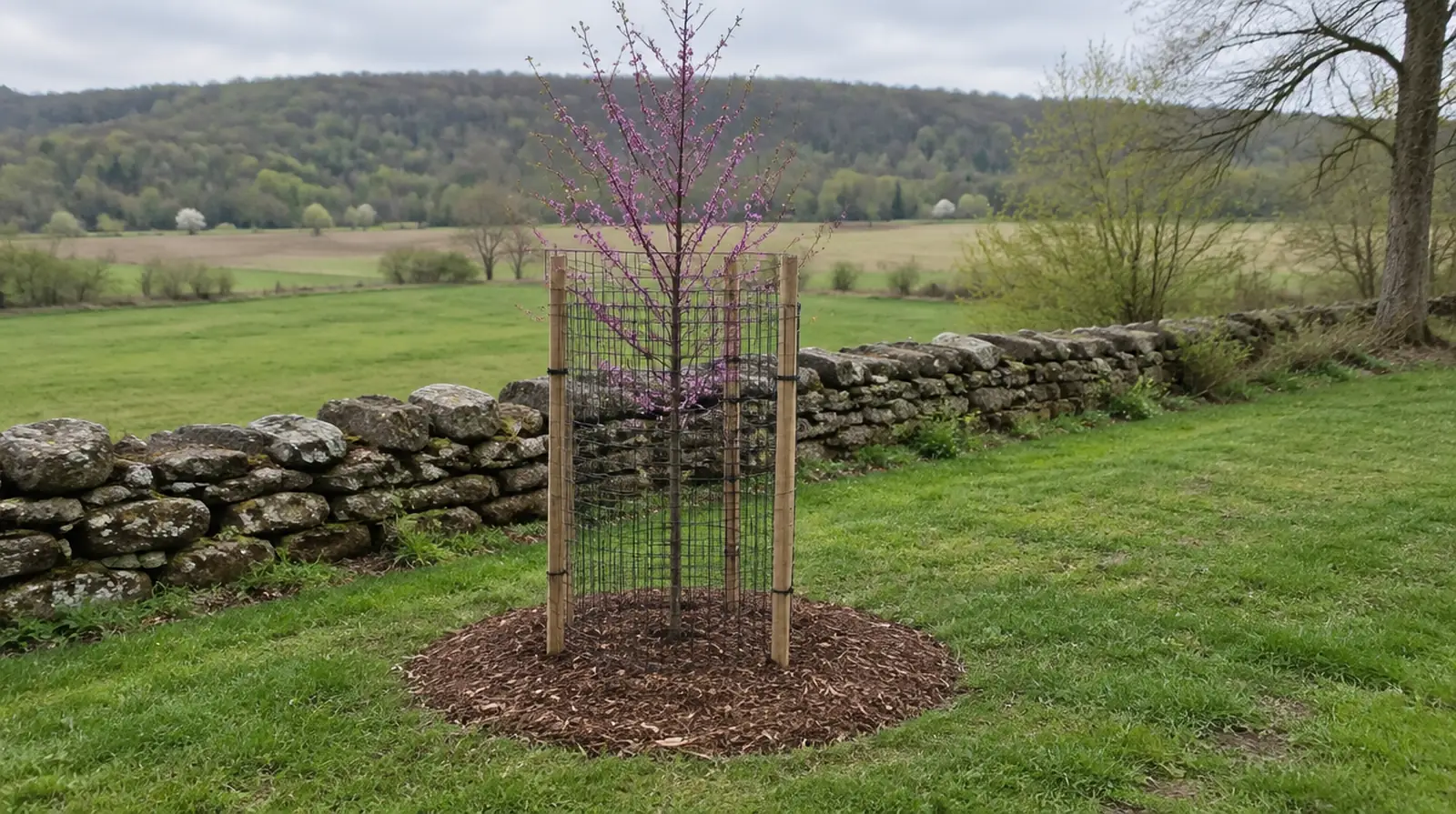
Warren County has a large deer herd, and a young tree with tender bark and low buds is a target. Bucks rub their antlers on small trunks every fall, and does browse buds all winter. Most of the young trees we see die here were eaten or girdled, not killed by disease. For any tree under about eight feet, we put a wire cage or tree guard around it at planting and recommend keeping it on for several years.
Where to put it
Most homes near downtown and along Washington Avenue have narrow lots, sidewalks and overhead service lines. A tree that will reach sixty feet does not belong under a wire or ten feet from the foundation. We pick a spot based on mature size, not on how the sapling looks the day it arrives. The strip between the sidewalk and the street may be borough property, so check with borough hall before planting there. We also call New Jersey One Call (811) to mark buried utilities before we dig.
When we plant
The best windows here are fall, from mid-September until the ground starts to freeze, and spring, from when the soil thaws until about late May. Fall planting gives roots several cool, damp months to grow before summer heat. Summer planting can work with container trees if you can water consistently, but we do not plant into frozen ground.
How we plant a tree
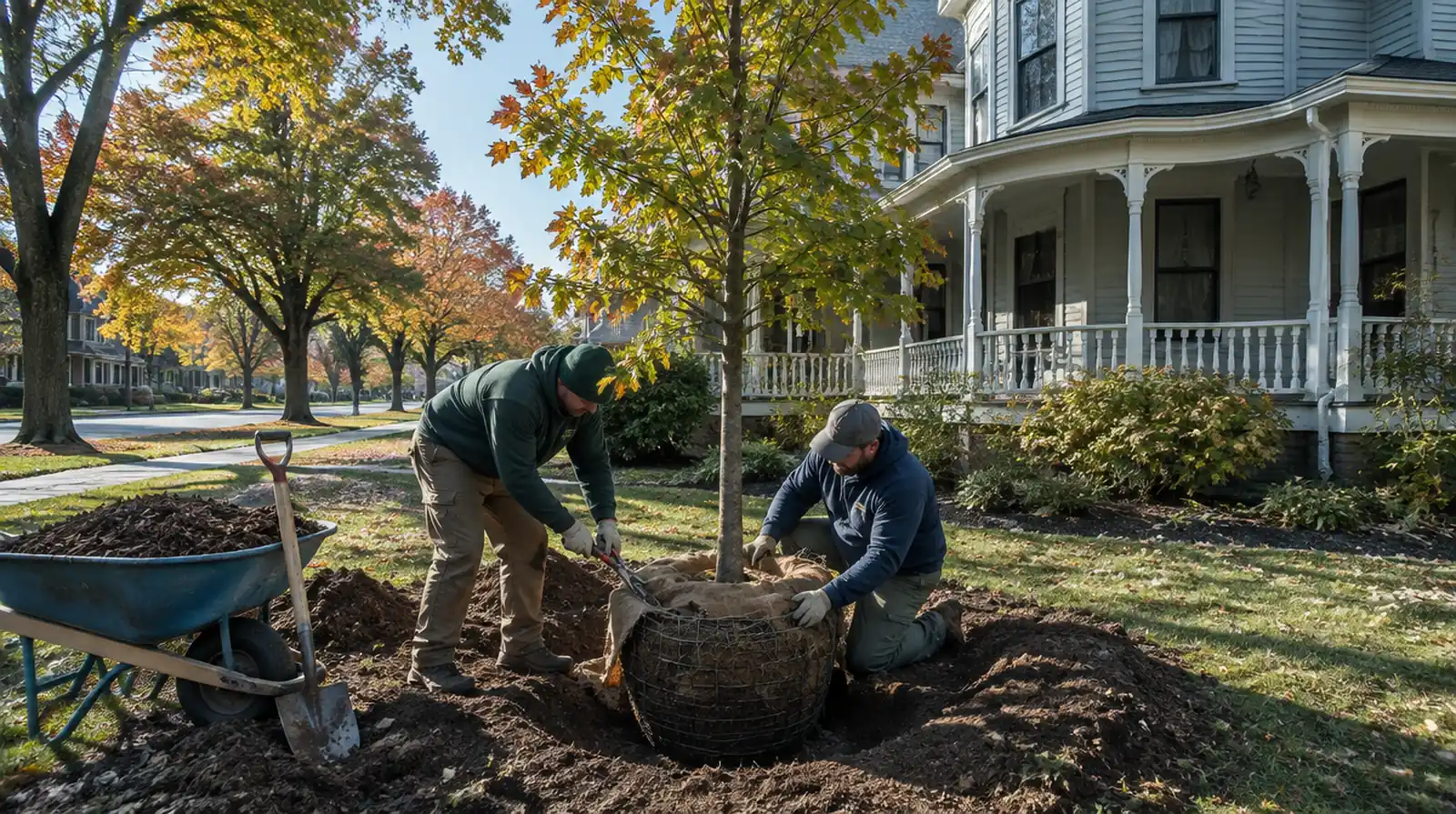
- Find the root flare, where the trunk widens into the roots, and set it at or just above grade. Planting too deep is the most common mistake we see.
- Dig a hole two to three times as wide as the root ball and no deeper than it.
- Cut away burlap, twine and the wire basket from the top and sides, and loosen circling roots on container trees.
- Backfill with the native soil, water deeply to settle it, and skip heavy amendments that keep roots from spreading out.
- Spread two to three inches of mulch in a wide flat ring, kept a few inches off the bark. No mulch volcanoes.
The first two summers
A new tree needs a slow, deep watering about once a week when it has not rained, roughly ten gallons for a small tree. Clay holds water, so check the soil with your finger before watering again. We stake only when wind or a slope truly calls for it, and we remove stakes after one season.
Planting questions
Can you plant where an old tree was removed?
Yes, but usually a few feet to one side. If the stump is still there, we can grind it first. See our stump grinding page.
Do you plant on larger properties?
Yes. We plant windbreaks, rows along fields and groups of trees in Washington Township, Franklin Township, Mansfield and Oxford, as well as in the borough.
Planning to add trees this season?
Call (908) 402-4345. We will walk the property with you, talk through species and spots, and give you a written price.